Aloe Vera
Safety 5/5Aloe barbadensis
Best Used For
Quick Answer
Aloe vera benefits skin by providing intense hydration (it's 99% water), calming inflammation with acemannan and aloe-emodin, and forming a protective barrier that prevents moisture loss. Comedogenic rating of 0 makes it the safest moisturizing ingredient for any skin type.
Key Takeaways
- ✓Comedogenic rating 0 — safe for all skin types including acne-prone
- ✓Acemannan polysaccharide provides deep, long-lasting hydration and accelerates wound healing
- ✓Aloe-emodin and aloin calm redness and irritation on contact
- ✓Safety rating 5/5 — minimal risk of reaction
- ✓Works for both oily monsoon skin and dry winter skin — India's two opposite seasonal challenges
What is Aloe Vera?
Aloe vera (Aloe barbadensis) is a succulent plant whose inner leaf gel has been used in skincare for over 5,000 years — from ancient Egypt and the Indian subcontinent to Mesoamerica. With a comedogenic rating of 0 and a safety rating of 5, it is the most universally appropriate moisturizing ingredient in nature. It is also one of the few ingredients where the folk wisdom and the peer-reviewed science are in complete agreement.
The plant is 99% water by weight, but that remaining 1% is an extraordinarily complex cocktail of polysaccharides, anthraquinones, vitamins, minerals, and enzymes. It is this 1% that does essentially everything.
Active Compounds
- Acemannan — a beta-(1,4)-acetylated mannan polysaccharide that attracts and holds water molecules; also the primary wound-healing compound
- Aloe-emodin — anti-inflammatory anthraquinone that reduces redness and prostaglandin-driven irritation
- Aloin — calms inflammatory skin conditions; also mildly antibacterial
- Aloesin — mild tyrosinase inhibitor that can help even skin tone over time
- Vitamins C and E — antioxidant protection against UV and pollution damage
- Zinc — pore-tightening astringent
- Gibberellins — plant hormones that stimulate collagen synthesis in the skin (a less-cited but meaningful anti-aging mechanism)
Benefits
Deep Hydration Without Greasiness
Aloe's water-rich composition hydrates the skin's stratum corneum without leaving an oily film, making it perfect for India's humid climate and for the large proportion of Indian consumers who have oily or combination skin and resist traditional moisturizers because of heaviness. Dal'Belo, Gaspar & Maia Campos (Skin Research and Technology, 2006) demonstrated in a controlled trial of 20 subjects that freeze-dried aloe vera extract significantly increased skin hydration over two weeks compared to baseline, working via a humectant mechanism rather than an occlusive one — meaning it draws water to the skin rather than sealing it in with a film.
Calms Sensitive Skin
Aloe-emodin and aloin directly reduce the prostaglandins responsible for skin redness and irritation, providing near-instant relief for sensitive or reactive skin. This anti-inflammatory action is why aloe is the first-line recommendation for razor burn, waxing aftermath, and over-exfoliation recovery — common concerns for Indian consumers who frequently undergo threading, waxing, and parlour facials.
After-Sun Repair
Aloe is scientifically validated for treating mild sunburn, reducing redness and accelerating skin repair. Its acemannan polysaccharide is the active mechanism — researchers at Zhejiang University (Scientific Reports, 2025) demonstrated that acemannan promotes keratinocyte proliferation and migration through EGFR/PKC-dependent signalling pathways, directly accelerating the re-epithelialisation needed to repair sun-damaged skin. Apply within 24 hours of sunburn for best results.
Aloe Vera for Indian Climate
India presents a unique climate paradox that most global skincare ingredients cannot address simultaneously. Aloe vera can.
The Monsoon-to-Winter Problem
From June to September, humidity is extreme — 80–95% across most of the country. In this environment, oily and combination skin overproduces sebum, breakouts spike, and heavy creams become intolerable. Aloe vera is oil-free and non-comedogenic, making it one of the few ingredients that provides meaningful hydration without aggravating humidity-triggered breakouts.
From November to February, North India and the Deccan plateau experience dry, cold air that strips moisture from the skin rapidly. The same skin that was excessively oily in July can feel tight and flaky by December. Aloe vera — particularly in an overnight gel mask — replenishes moisture without requiring a switch to an entirely different skincare product.
This seasonal duality makes aloe vera one of the most practical year-round skincare investments for an Indian household.
India's UV Index and Sun Damage
India sits between 8°N and 37°N latitude, with large portions of the country regularly experiencing UV Index levels of 10–12 (the "extreme" category). Year-round UV exposure means sun damage accumulates faster in Indian skin than in European skin, and the need for post-sun repair is not just a summer concern. Aloe's acemannan-driven keratinocyte repair mechanism is relevant every month of the year for most Indians.
Hard Water and pH Disruption
Hard water — common across Delhi, Mumbai, Bengaluru, and most Tier 2 cities — strips the skin's acid mantle after washing. Aloe vera, with a pH of approximately 4.5–5.5, is naturally pH-balanced close to skin's own 4.7. Applying aloe gel after washing with hard water helps re-acidify the skin surface and restore the barrier function that alkaline water disrupts.
The Three Forms of Aloe Vera
Understanding which form you are buying or using matters significantly for results.
1. Fresh Gel from the Plant
The most potent form. Fresh aloe gel contains the highest concentration of acemannan and the full spectrum of enzymes that begin to degrade shortly after the leaf is cut. If you have a potted aloe plant (they grow readily on Indian balconies with minimal care), scoop the clear inner gel from a mature lower leaf. Apply directly to skin, leave for 20–30 minutes, and rinse. This form has no preservatives, no fragrance, and no dilution — but it has a short shelf life of 1–2 days in the fridge.
What to avoid: the yellow latex layer directly under the skin of the leaf. This is aloe-emodin-dense and can cause irritation or photosensitivity in high concentrations.
2. Commercial Aloe Vera Gels
Widely available — from pharmacy brands to premium ranges. The challenge is significant variation in actual aloe content. A product labelled "Aloe Vera Gel" may be 90% water with trace aloe, or it may be 95% aloe barbadensis leaf juice. The difference in efficacy is substantial.
What to look for: "Aloe barbadensis leaf juice" as the first ingredient. Products that list "Aqua" first and aloe vera fifth or sixth have minimal therapeutic benefit. Carbomer (a gelling agent) is frequently used to thicken water into an aloe-like texture — its presence high in the ingredient list is a red flag for a diluted product.
3. Aloe Extract in Formulations
Water-based or glycerin-based aloe extraction used as a functional ingredient in serums, toners, and moisturisers. This form is precisely concentrated and stable. You may not be buying a "pure aloe gel" product, but aloe extract as an ingredient in a well-formulated serum or moisturizer is perfectly valid — sometimes more so than a poorly formulated pure-aloe product. Look for it in the first five ingredients of any formulation where it is positioned as an active.
Aloe Vera for Sunburn — A Closer Look
India's UV levels make sunburn a regular concern, not a holiday hazard. Aloe vera's mechanism here is the most well-understood of all its skin benefits.
When UV radiation damages skin, it initiates an inflammatory cascade: vasodilation causes redness, keratinocytes at the surface begin to die, and the dermis below sends signals for repair. Acemannan accelerates the repair phase directly. The 2025 Scientific Reports study confirmed that acemannan activates EGFR (epidermal growth factor receptor) on keratinocyte surfaces, triggering both cell proliferation (making new skin cells) and cell migration (moving them to fill in damaged areas). This is not just soothing — it is active structural repair.
How to use for sunburn: Apply a generous layer of pure aloe gel (fresh or high-content commercial) to the affected area within 24 hours of sun exposure. Reapply every 3–4 hours. Refrigerating the gel before application provides additional vasoconstriction relief from the cool temperature alongside the biochemical repair. Do not combine immediately with exfoliants or vitamin C — both are appropriate later in recovery but can sting and irritate sunburned skin in the acute phase.
Aloe Vera + Other Ingredients
Aloe vera functions exceptionally well as a mixing base and as a paired ingredient. Its water-based, non-occlusive texture means it does not block other actives from absorbing.
Aloe + Neem (for oily and acne-prone skin)
Mix neem leaf powder into fresh aloe gel to create an antibacterial hydrating mask. The aloe delivers moisture and anti-inflammation; neem targets bacteria and sebum. This is the classic Ayurvedic combination for acne-prone skin — soothing enough for daily application yet effective enough to reduce active breakouts.
Aloe + Turmeric (for brightening)
A quarter teaspoon of turmeric powder in two tablespoons of aloe gel makes an effective brightening mask. Turmeric's curcumin inhibits melanin synthesis and reduces oxidative dullness; aloe provides hydration and ensures the mask sits on the skin without drying. Leave for 15 minutes. Note: turmeric will temporarily stain fair skin yellow — use it in the evening and rinse thoroughly.
Aloe + Rose Water (face mist)
Equal parts aloe vera juice and rose water in a spray bottle creates a lightweight hydrating mist. This works particularly well during the dry season or in air-conditioned offices. Rose water's toning and mild astringent properties complement aloe's deep hydration, and the combination stays fresh in the fridge for up to a week.
Aloe + Tea Tree (for breakouts)
Add 2–3 drops of tea tree essential oil to a tablespoon of aloe gel for a targeted spot treatment on active pimples. The aloe acts as a safe, non-comedogenic carrier that dilutes tea tree to a skin-safe concentration while adding its own anti-inflammatory action. This is a gentler spot treatment than pure tea tree oil, which is often too concentrated for direct skin application.
Indian Aloe Vera Products to Look For
The Indian market has several genuinely good aloe products alongside many heavily diluted ones. These are worth considering:
- WOW Aloe Vera Multi-purpose Gel — one of the most popular pure aloe gels on Indian e-commerce. Lists aloe barbadensis leaf juice as the primary ingredient. Widely used as a hair-leave-in, face moisturizer, and post-sun gel.
- Patanjali Saundarya Aloe Vera Gel — affordable and widely available across Patanjali stores and general trade. Reasonable aloe concentration for the price point. A good entry-level option for daily use.
- Forest Essentials Aloe Vera & Cucumber Toner — a premium formulation that uses aloe as a base for its toning action, combined with cucumber extract. Better suited for those looking for a complete facial toner than a pure hydrating gel.
For sensitive skin or post-procedure care (after threading, waxing, or parlour facials), a simple, fragrance-free aloe gel with minimal additives is preferable over fragranced premium formats.
How to Build Aloe Vera Into Your Routine
Aloe vera is one of the most forgiving ingredients in skincare — it is genuinely difficult to use incorrectly. Some practical guidance:
As a daily moisturizer (oily skin): After cleansing and toning, apply a thin layer of pure aloe gel as your sole moisturizer. For most oily Indian skin in summer, this is sufficient hydration without adding any occlusive weight.
As a serum base (all skin types): Apply aloe gel first on damp skin, then layer your actives (vitamin C, niacinamide) on top. Aloe's hydrophilic surface helps actives spread and absorb more evenly than applying them on dry skin.
As an overnight mask (dry skin): Apply a thick layer of pure aloe gel before bed, leave overnight. The extended contact time allows acemannan to work on transepidermal water loss through the night. Wash off in the morning. This approach is particularly effective for dry skin relief during North India's winters.
After sun, waxing, or threading: Apply immediately to the treated area. No need to wait. Aloe's anti-inflammatory compounds begin working on contact.
Frequently Asked Questions
Products with Aloe Vera
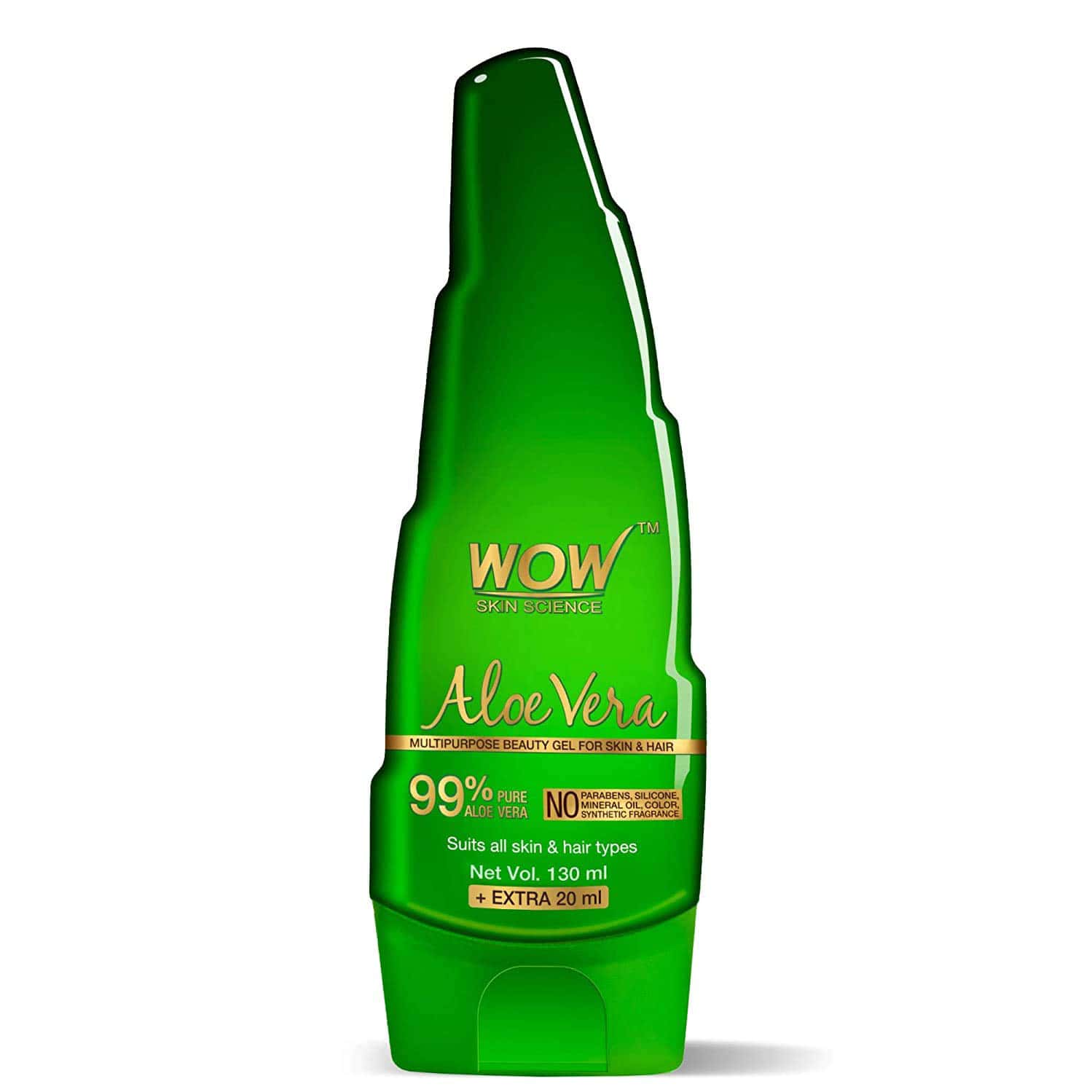
Moisturizer · wow
WOW Skin Science 99% Pure Aloe Vera Gel
₹299
Read ReviewIngredient lists are sourced from brand websites and may vary by batch.